
Bananas are one of the most popular fruits across the globe. They are not only delicious, but they are also nutritious. Usually, people discard the peel (skin) afterward unless they compost. Various ideas for reusing banana skins have surfaced on the internet recently, and one of them includes making banana water for use as an organic fertilizer. In this blog post, I will share the effective use of banana peel water to enhance the growth of your garden.
Table of Contents
What is Banana Peel Water?
Banana peel water is an organic fertilizer you can make at home using simple ingredients. It is an effective way to provide nutrients to plants and can be used on various plants. The nutrients and minerals in banana peels are gradually released into the water as the peel fibers are broken down.
How is Banana Water Beneficial For Your Plants?
The primary nutrients found in banana water are Potassium, Magnesium, Manganese, Sodium, Calcium, Iron, and a bit of protein. Potassium is a mineral and electrolyte that conducts electrical impulses in our bodies. It performs the same function in plants in transporting sugar and water. Potassium is a macronutrient since plants derive large amounts of the mineral all throughout their lives. Similar to other micronutrients,
The Benefits of Potassium in Plants
Potassium is an essential nutrient for plants, giving them the strength to grow stronger stems, be tall, and resist disease. Without potassium, plants would be stunted and susceptible to pests and diseases. Potassium also helps plants regulate water uptake, ensuring they have enough water during a drought. All these factors make potassium an important nutrient for farmers and gardeners alike. Some argue that plants need more potassium than any other nutrient, so it's important to have enough available in the soil. Potassium is crucial for photosynthesis, which is a process that converts carbon dioxide into glucose and releases oxygen.
Potassium Deficiency in Plants
Some of the common symptoms of potassium deficiency include brown scorching of leaves along with chlorosis. Sometimes, purple spots are also seen underneath the leaves. When there is potassium deficiency, root development, fruit, and seed growth are also diminished. The deficiency of potassium is also known to cause the yellowing of leaves and, eventually, the death of the entire plant. Potassium is an important nutrient in the process of water transportation within the plant.
How to Make Banana Peel Water Fertilizer
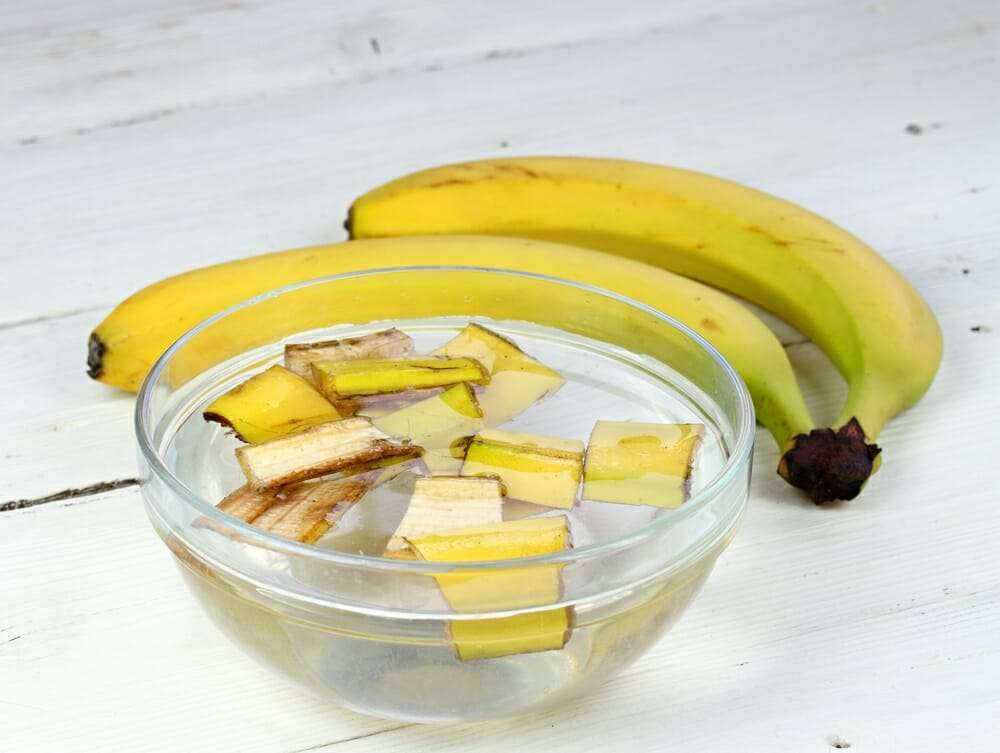
There are two primary ways to make banana peel water – brew (slower method) or boil. Banana water is made by adding banana peels to water and allowing the mixture to steep for several days. The resulting liquid is then diluted and applied to the soil around the plant.
Brewing Method
- Brewing is a slower process however, this natural liquid organic banana peel fertilizer is quite easy. You'll need a large jar and fill 1/2 of it with water and store it in the fridge. After you eat a banana, cut the peel into small pieces and add the peel to the jar. When the jar is full, strain the peels and dilute by mixing the banana peel water with a gallon of plain water. Most people fill their jar in 1-2 weeks. But of course, it depends on your appetite for bananas.
- If you don't want to keep this banana peel tea in your refrigerator, you can make small batches by taking a small mason jar, filling 3/4 with water, and adding smaller pieces of banana peels to the water. After two days, strain the peel, and dilute with water (approx. small mason jar).
Boiling Method
Like the brewing method, boiling banana peels is far quicker and generally takes half an hour to 45 minutes to make. Boil several banana peels in 1/4 gallon of water (use your judgment, the measurement isn't exact) After the allotted time, strain the peel and allow it to cool completely. Dilute by mixing the banana peel water with a 1/2 – 1 gallon of plain water. Water your plants as normal.
It's important to note that all the nutrients are not diminished by boiling. The peel still contains copious amounts of nutrients and can be used as organic fertilizer. Alternatively, you may dry the peels and reuse them on your plants as a good source of slow-releasing minerals.
Using Discarded Banana Peels (after making banana peel tea)
- The soaked banana peels you removed from the water after preparing compost tea still contain reasonable amounts of nutrients. This indicates they can be further used as fertilizer.
- Make a slurry of soaked peels in your blender and add them to your soil or at the base of your plants. This is a great measure of pest control.
- Make your own soil amendment by dehydrating the peels and grinding them into a fine powder so that they can be directly added to the soil.
- When prepping your seedlings, banana peel powder can be an effective addition. Add a pinch into each pot or planting hole to ensure the seeds have a boost of essential nutrients.
Where to Use Banana Water
Tomato plants, potatoes, fruit-bearing plants, and other edible plants can benefit from banana water. Simply water at the base of the plants to promote healthy plant growth. Be sure to do this in moderation, as too much banana water can harm your plants. you know that you can water your rose bushes with banana water. While growing up, I recall my father placing banana peels at the base of his rose bushes.
How To Make a Banana Water Foliar Spray For Plants
Have you ever seen the ingredients of foliar spray? You probably have the necessary ingredients in your home to make your own. Try making this natural fertilizer foliar spray. Not only does it have vital nutrients, but it will also save you money.
Banana Water Foliar Spray Recipe
- 4 Dried and ground banana peels
- 3 Dried and grounded eggshells
- 1 Tablespoon of Epsom salt
- 1 Quart of water
- 1 Clean spray bottle
Directions: Mix and process all the dry ingredients in a food processor until it is powdered. Add the dry ingredients to a quart of water and pour into a spray bottle. Be sure to label your spray bottle and tell your plants, “You're welcome”.
What is Fermented Banana Water?
Fermented banana water is made from bananas that have been fermented for a certain amount of time, usually 24-72 hours. You can make your own.
Blueberries and other acid-loving plants will enjoy the boost of your banana vinegar. The first step is to ferment the banana peels to make a slurry. Here's how:
- Add banana peels to a mason jar and add water. (Key, keep the peels under water.
- Next, cover it with a fine cloth and let it rest for a week at room temperature. This will allow the good bacteria to slowly release the nutrients of the banana peel. After a week, put the entire jar content into a blender to make a slurry.
- Now allow it to rest for a few weeks more till it ferments and changes to vinegar. (You will know that the concoction is ready for use when it smells like vinegar.) If it smells very strong, dilute it before watering your acid-loving plants.
I have a lot of plants. Therefore, I use a 5-gallon bucket with a lid and add peels to it as I eat bananas. Tip: It's a good idea to leave the bucket outdoors because after fermenting starts, it will stink when you open the lid, but that's to be expected. The rewards outweigh the temporary stench.
Benefits: Bigger blooms
Using Fermented Banana Peel Water as a Pesticide
Adding banana water to the soil is a great way to prevent pests from destroying your plants. You can use it as an organic pesticide and still get all of the benefits of using regular banana water. If you don’t want to use banana water on your plants, then you can spray it directly on the pests. You may have to reapply the banana water after a few days if you are dealing with a heavy infestation of pests.
Using Banana Water as a Pest Control
If you compost, you have already tossed banana skins into a compost pile or compost bin. But did you know you can use banana peels as a pest repellent?
You can spray the peel tea directly on the plants to repel aphids from your indoor and outdoor plants. As an added bonus, the plants will also absorb the minerals present in the compost tea through the leaves. Banana water can help your plant become resilient to excessive water and drought along with temperature fluctuations. Your plants will be more resistant to diseases and pests. When you use it on your houseplants, the potassium content of the banana water will make your plants immune to fungal and bacterial infections, gnats, and root rots.
Using Banana Peel as Pest Control
Instead of using harmful chemicals to control pests, try banana peels.
1. Cut a few banana peels into pieces
2. Place them into a disposable plastic container with a lid
3. Cover the peel with apple cider vinegar
4. Place the lid on the container
5. Punch a few small holes in the lid for gnats to enter.
How does it work? Fruit flies and other undesired visitors to your garden or house will be attracted to apple cider and banana scent. They will try to enter through those holes and completely drown in the mix. Though it cannot remove all the flies and insects from your garden, it can certainly remove many of them.
Got earwigs? No worries, I wrote a blog post on 4 alternate ways to keep earwigs at bay
Frequently Asked Questions – Banana Peel Water
Q: How Long Does It Take For Banana Water To Work?
A: The time to see results depends on how long the plant has been under stress. However, typically, you should begin seeing signs of recovery after 3 days for a severely affected plant. The growth will be visible within 2 weeks.
Q: How often should I water my plants with banana water?
A: The rule of thumb is to water your plants with banana peel water once every 1-2 weeks but in moderation. Use a moisture meter to check the soil your plants get enough water, you should use a moisture meter to check the soil. To use banana water on your plants, pour it directly onto the soil around the base of your plant.
How long do you leave banana peels in water for plants?
Banana peels can be left in water for plants for a period of 24 to 48 hours.
What plants like banana peel water?
Banana peel water can be beneficial for plants such as roses, tomatoes, peppers, and houseplants.
Conclusion
Using banana peels as a plant fertilizer for outdoor plants may sound unconventional, but this method is backed by science and highly effective. Whether you want to use it as a fertilizer or a compost tea, or for warding off pests – banana peels are equally fantastic at every role. So when will you start using this eco-friendly and liquid fertilizer in your garden?